
How is Crosswind Calculated?
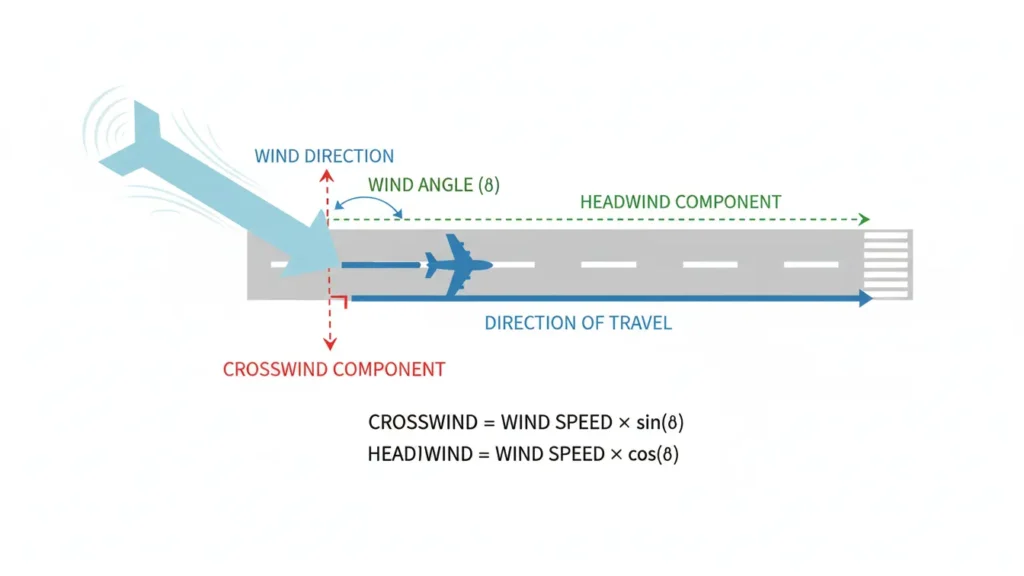
Wind rarely behaves the way we expect it to. Sometimes it pushes from behind, sometimes from the side, and most of the time it does a mix of both. What makes this difficult is that our eyes and instincts are poor at judging sideways wind force, especially when the wind is not blowing straight across.
This is why crosswind calculation often feels confusing. Two situations with the same wind speed can produce very different sideways effects, and small changes in direction can completely change what you are dealing with. Understanding how crosswind is calculated removes that uncertainty and replaces guessing with clarity.
Information Needed for a Proper Calculation
A correct crosswind calculation always starts with three inputs:
- Wind Speed: which tells you the overall strength of the wind.
- Wind Direction: meaning the direction the wind is coming from. This detail matters because reversing it completely changes the result.
- Your Direction Of Travel. This could be a runway heading, road direction, or any fixed path you are following.
Without all three, any estimate of crosswind is incomplete.
The Role of the Wind Angle
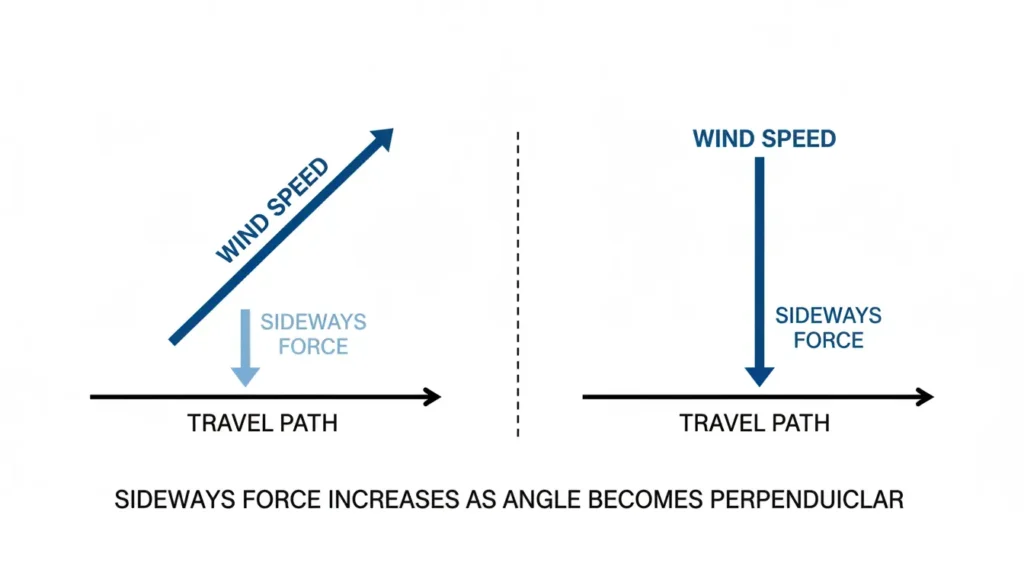
The angle between the wind and your direction of travel determines how the wind force is divided. When the wind comes almost directly from the side, the angle is large, and most of the wind becomes crosswind. When the wind comes from slightly ahead or behind, the angle is smaller, and the sideways force is reduced. This explains why small changes in wind direction can cause large changes in crosswind strength. The angle controls the outcome more than most people expect. This is why even a small change in wind direction can cause large changes in crosswind strength.
The Logic Behind Crosswind Calculation
Crosswind calculation is based on geometry, not guesswork, which is why the same inputs always produce the same result. The sideways force is calculated by combining wind speed with the angle between the wind and your direction. A trigonometric relationship is used to isolate only the portion of the wind that pushes sideways.
You do not need to perform this math manually. What matters is knowing that the calculation is grounded in physics and produces consistent results regardless of wind angle.
This is why calculators are far more reliable than mental shortcuts. The other part acts across your direction of travel. This is the crosswind component. Visualizing this split is important because it explains why the total wind speed is never the same as the crosswind value unless the wind is perfectly perpendicular.
Why Wind Speed Alone Is Misleading?
Most people focus on wind speed first. This feels natural, but it is incomplete. The key factor is not speed by itself. It is the relationship between wind direction and your direction of travel. Without direction, wind speed alone cannot describe how much sideways force is actually acting.
A 20-knot wind does not always create the same challenge. If it blows directly along your path, it mostly affects forward motion. If it blows from the side, part of that same wind becomes a sideways force. This sideways force is what creates drift and loss of alignment.
How Wind Splits Into Components?
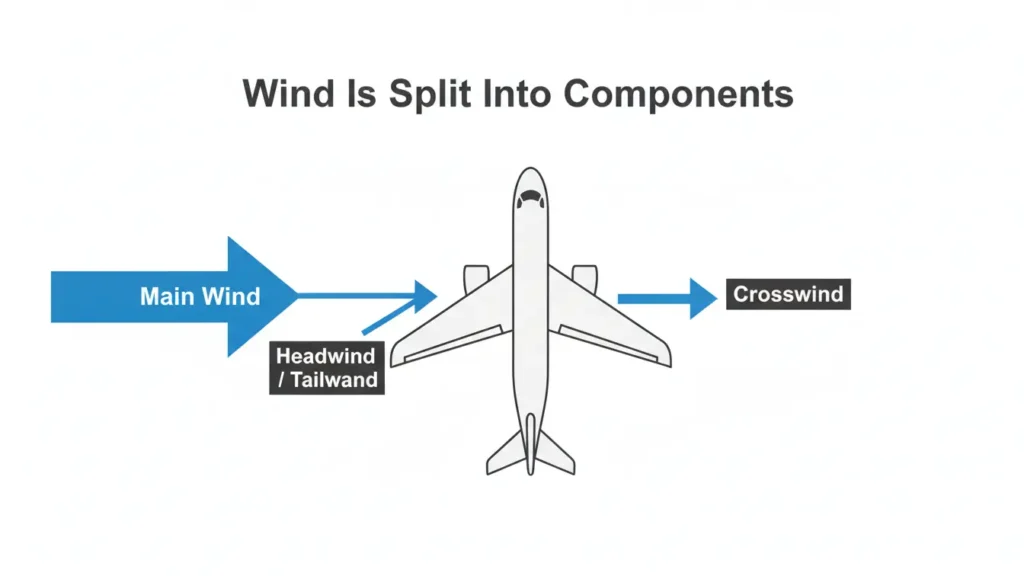
Wind does not act as one single force when it hits at an angle. It separates into components. One part of the wind acts along your direction of travel. This becomes either a headwind or a tailwind depending on where it comes from.
The other part acts across your direction of travel. This is the crosswind component. Visualizing this split is important because it explains why the total wind speed is never the same as the crosswind value unless the wind is perfectly perpendicular. To make this easier to understand, wind is usually broken into two simple parts.
Why Does Estimating Often Fail?
Human perception is not good at judging angles, especially under pressure. This limitation affects everyone, regardless of experience, because our perception is not designed to measure angles accurately. A wind that feels manageable can suddenly become challenging if its direction shifts slightly. Gusts can increase the sideways force without any noticeable change in average speed. Surface conditions and surrounding structures can also distort how wind feels.
Because of these variables, estimating crosswind by feel alone leads to frequent errors. Calculation removes these uncertainties by relying on measurable inputs instead of perception.
How Do Crosswind Calculators Work So Quickly?
A crosswind calculator applies the correct geometry instantly. You enter wind speed, wind direction, and your direction of travel. The tool then separates the wind into crosswind and headwind or tailwind components. Many calculators also provide a visual display, which makes it easier to understand how the wind is interacting with your path.
This clarity is useful, especially when conditions change quickly. Instead of re-estimating, you can recalculate and see the updated result immediately. Because of these variables, estimating crosswind by feel alone leads to frequent errors. Calculation removes these uncertainties by relying on measurable inputs instead of perception

Interpreting the Result Correctly
The crosswind value shown by a calculator represents the effective sideways force acting on you. A higher value means stronger lateral pressure and a greater need for correction. A lower value means the wind is contributing more to forward or backward motion instead. Seeing crosswind alongside headwind and tailwind components gives a complete picture of the wind environment, not just a single number.
Why is Understanding the Method Mandatory?
Understanding how crosswind is calculated changes the way you interpret wind entirely. Instead of reacting to a single wind number, you begin to see how direction, angle, and speed combine to create real sideways force.
Once you understand this method, crosswind stops being unpredictable. Whether you are planning ahead or checking conditions in the moment, knowing how the calculation works allows you to make decisions with confidence rather than assumptions.
Calculated Crosswind in Real Decisions
In real-world conditions, the safest approach is to rely on accurate inputs and verified calculations. Instead of guessing, use a crosswind calculator to see exactly how the wind is behaving relative to your direction. This allows you to assess conditions clearly and make decisions based on real forces rather than assumptions.
When you understand how crosswind is calculated and what the result means, you move from reacting to wind to anticipating it.
When you understand how crosswind is calculated and what the result means, you move from reacting to wind to anticipating it.